Dresden has
a long history as the capital and royal residence for theElectorsandKings of
Saxony, who for centuries furnished the city with cultural and
artistic splendor. The city was known as the Jewel Box, because of itsbaroqueandrocococity
center. The controversial British and Americanbombing of Dresden in World War IItowards the end of the war killed
approximately 25,000, many of whom were civilians, and destroyed the entire
city center. The bombing gutted the city, as it did for other major German
cities. After the war restoration work has helped to reconstruct parts of the
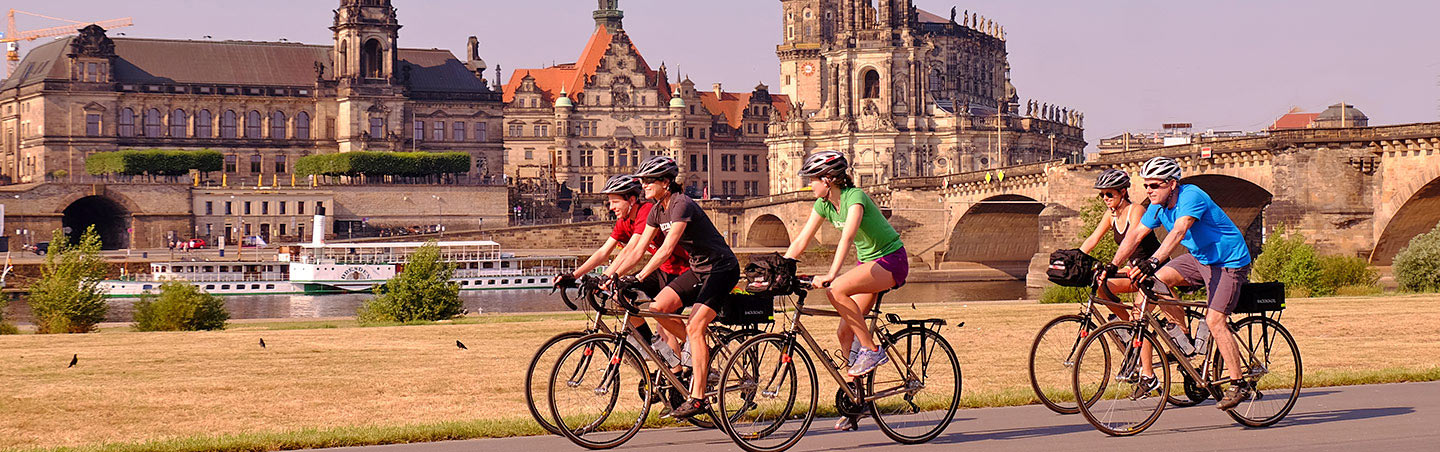
historic inner city, including theKatholische Hofkirche, theSemper Operand theDresdner Frauenkircheas well as the suburbs.
In my opinion I really love this city because there have a lot of things to do and see; for example biking, wake around the town etc. When I have an opportunity and money I will visit this wonderful city again.
Würzburg
lies at about equal distance (120 kilometer, or 75 miles) betweenFrankfurt am
MainandNuremberg.
Although the city of Würzburg is not part of theLandkreis Würzburg, (i.e. the
county ordistrict of Würzburg), it is the seat of the
district's administration. The city's population was 124,698 as of 31 December
2013.
Marienkapelle
Right on the market square is the giant red and white
Mary’s Church (or Marienkapelle).
In a city known for baroque architecture, the
gothic Marienkapelle with its vaulted ceiling stands out as being unique.
The Old Town
Pedestrian Zone
Most of Wurzburg’s old city is a car-free pedestrian zone.
One of the great things to do in Wurzburg is stopping into the stores or
pulling up a chair at a sidewalk café for some people watching.
The Residenz
The Royal Residenz in Wurzburg
is one of the finest royal palaces in all of Europe. This UNESCO World Heritage
Site was extensively damaged during World War II, but has painstakingly
restored to its former glory. Contemporary to the palaces in Vienna, many of
the same themes and decorating styles flow through (including the obligatory
Asian-inspired green lacquer room). The Residenz can be visited on a
self-guided walking tour, or with a guided walking tour which allows access to
some of the other apartments (including the blue drawing room, the yellow
living room and the corner chamber – all highlights of my visit). The massive
“four continents” fresco is one of the largest ever created.
In my opinion I think this city is very cool!Because there have a lot of things to do. I never been there before, but one day I will visit this wonderful city.
Rothenburg ob der Tauber is a town
in the district ofAnsbachofMittelfranken(Middle Franconia), theFranconiaregion ofBavaria,Germany.
It is well known for its well-preservedmedievalold town, a destination for tourists
from around the world. It is part of the popularRomantic Roadthrough southern Germany. Rothenburg
was aFree Imperial Cityfrom the late Middle Ages to 1803.
Place to visit
Bird Eyes View from Rothenburg City
St. Jakob’s Church
MEDIEVAL WALL
Old Street In Rothenburg ob der Tauber
In my opinion I think this city is very beautiful. If youlike the old building or antique house you should come to visit this city. I was also there with my family. they also very like this Rothenburg city. Because It's very peaceful and wonderful town.
In my new series on hidden gems in Germany I am highlighting
some of the destinations that most visitors don’t include in their itineraries,
even though they are remarkable places of great beauty. They are all places I
recommend people visit on a trip through Germany – so if you are planning to
travel in my home country, I suggest including these places, which are all easy
to get to on public transportation and can be combined with other famous
tourist destinations in Germany.
Read
on to find out more about my first recommendation: Rügen Island. I
am pretty sure that most of you have never heard of this little island, located
in the Baltic Sea on Germany’s northern coast, connected to the mainland with a
bridge. So why don’t we let the island introduce itself in a little video?
Places to visit in Rügen Island
Rügen Bridge and Rügen Causeway
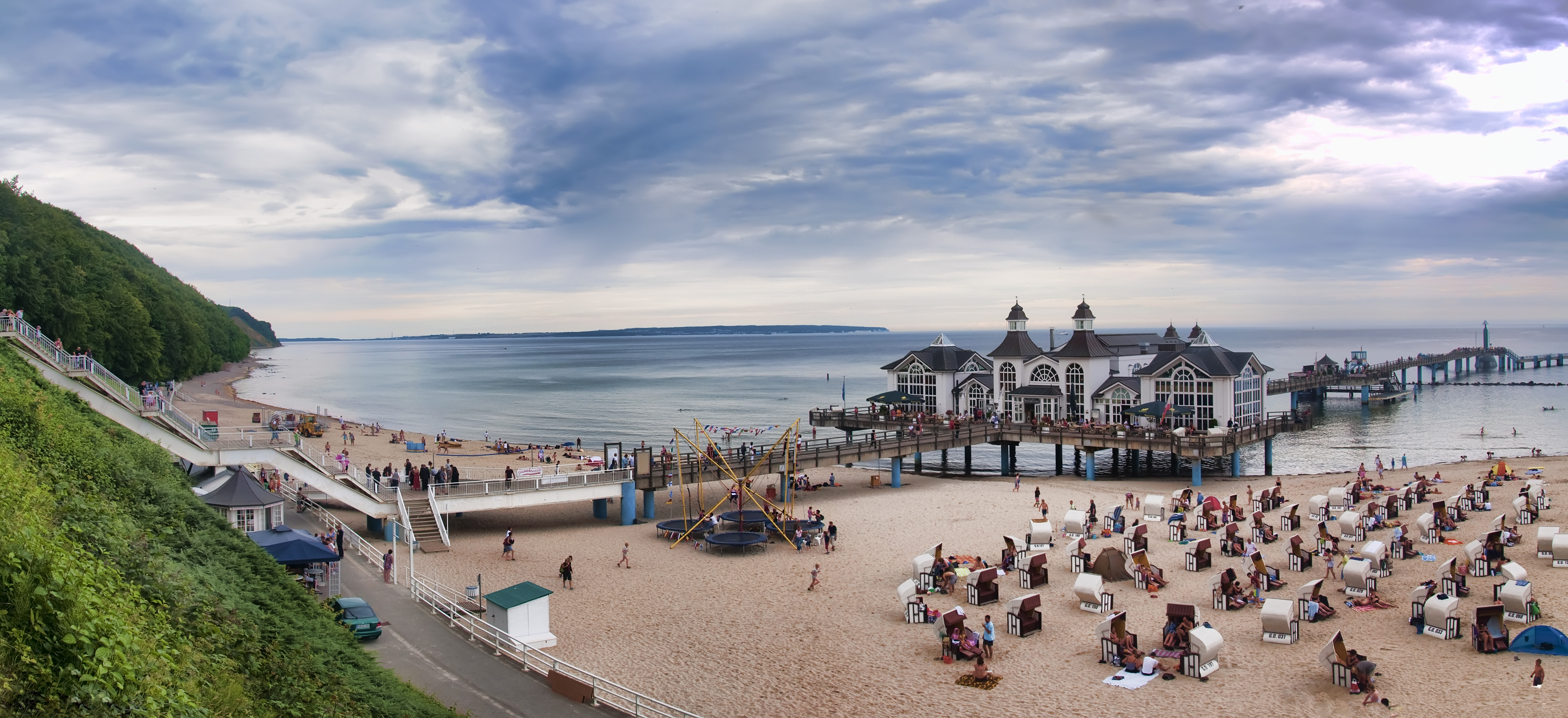
In the Baltic Sea, RugenIslandhappens to be the biggest island in Germany,
linked with the landmass by theRugen Bridge and Rugen Causeway. Wonderful
cottages, loving beach hotels and wonderful seashores all attract tourists to
Rugen Island.
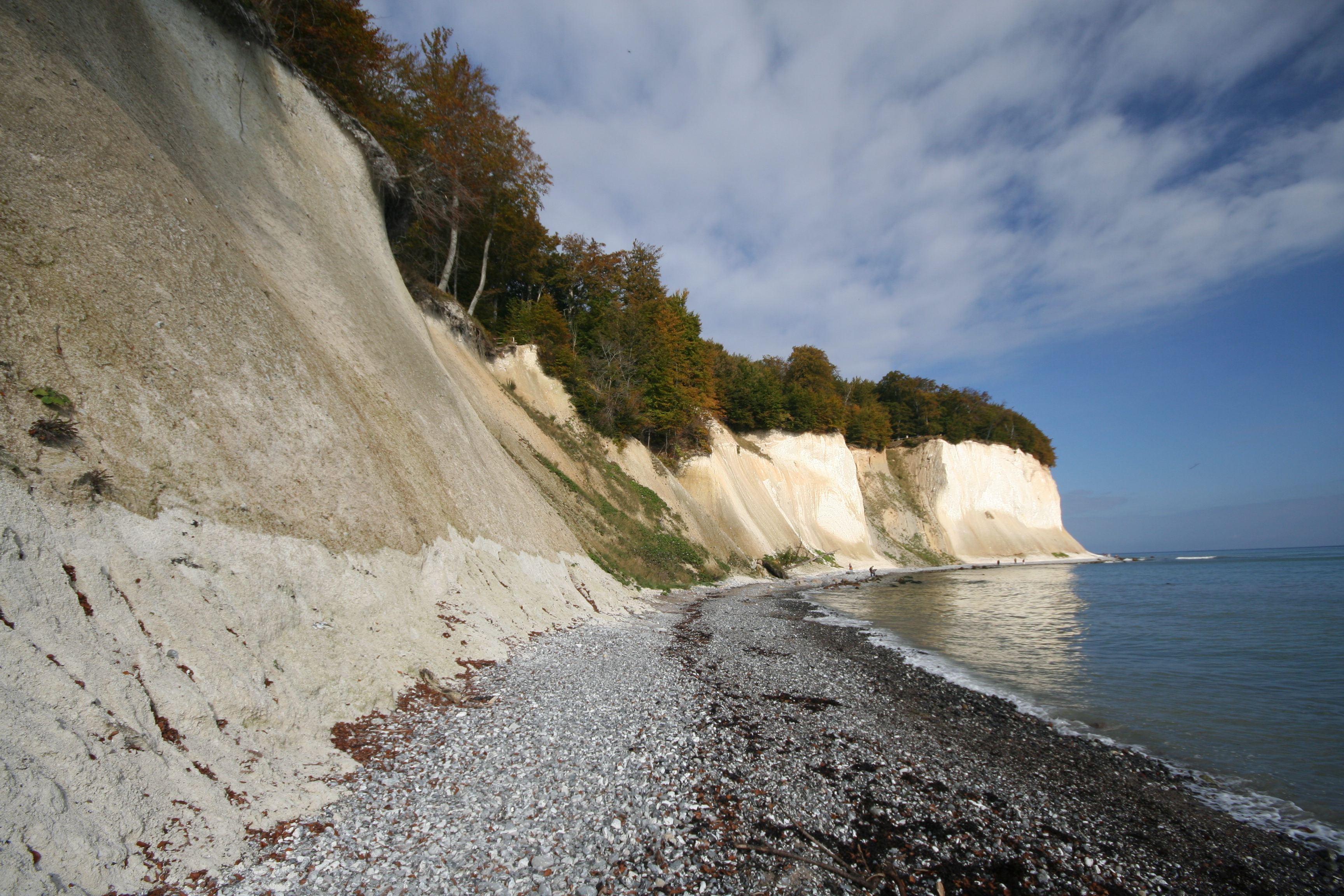
Jasmund National Park( white-sand beach )
In addition to serene white-sand beaches, the island is home to Jasmund National Park which makes for great day hikes and was even declared UNESCO World Heritage Site in 2011, thanks to its outstanding natural beauty. The National Park includes the massive 120 meters/390 feet steep and truly breathtaking King’s Chair White Cliffs – a place you can’t miss on a visit to the island. The 45 meter/148 feet high Cape Arkona marks the northernmost part of former East Germany and features two lighthouses, and makes for a splendid hiking destination.
Jagdschloss Granitz
Another must is the beach promenade of Binz, a gorgeous seaside town, best explored on a long walk or bike ride. Putbus is the oldest holiday resort on the island, these days an impeccable little village, beautifully restored and lined with white villas that give the town its nickname ‘White City’. Beyond Putbus on the far south eastern coast of the island is the Jagdschloss Granitz, a hunting lodge that looks more like a fairytale castle and offers splendid views over the Baltic Sea shore from its tower. You can walk the 12.5 kilometers from Putbus to the Jagdschloss – it takes about 2.5 hours to get there on foot. If you prefer cycling, there are around 200km of cycling paths on the island, and pedaling across the island is a great way to explore Rügen. There are bike rental places in all of the bigger towns and hostels.
Rustic narrow-gauge steam train
If you don’t feel all that active, jump
on the Rushing Roland (Rasender Roland), a rustic narrow-gauge steam train that
runs from Göhren to Lauterbach Mole, a 24km ride that passes lush forests,
poppy seed fields and deserted beaches.
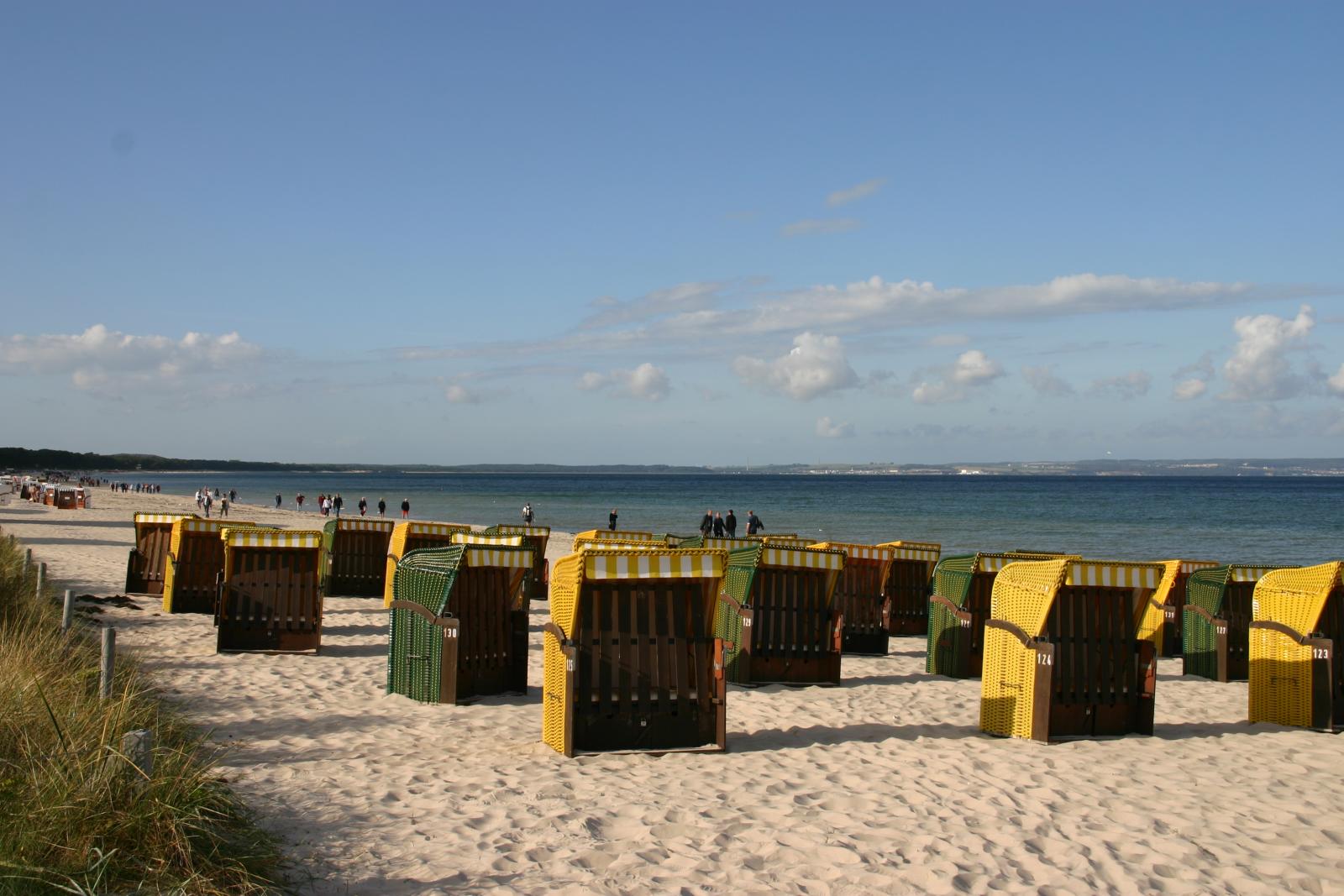
Typical German canopied sunchairs
A visit to Rügen is not complete without
a visit to one of its gorgeous beaches. A particularly picturesque beach with
the typical German canopied sunchairs(Strandkörbe) can be found north of the town of Göhren, so if you decide
to hop on the train, you can combine the ride with a beach visit before or
afterwards.
I also went there with my host family many times because in this island have a lot of things to do, for example: hiking, biking tour, trekking etc. We usually went to this island for hiking, biking, trekking, picknick with friends and chill. There have a wunderful natures and a lot of things that you can do with family. I think it's a great island to take a vacation.
The main portal of the soaring Nikolaikirche is
reached via an entrance off the Alter Markt. This masterpiece of medieval
architecture dates to 1270 and is modelled on Lübeck's Marienkirche. It's
interior is redolent with colour and is filled with art treasures. The main
altar (1708), designed by the baroque master Andreas Schlüter, shows the eye of
God flanked by cherubs and capped by a depiction of the Last Supper. Also worth a closer look are the high altar (1470),
6.7m wide and 4.2m tall, showing Jesus' entire life, and, behind the altar, a
1394-built (but no longer operational) astronomical clock .
Marinekirche
( Marine Church )
You'll need divine inspiration to guess the number
of bricks used to build the massive 14th-
century Marienkirche, a superb example
of north German red-brick construction. You can climb the steep wooden steps up
the tower for a sweeping view of the town, with its lovely red-tiled roofs, and
Rügen Island. The ornate 17th-century organ is a stunner.
Ozeneum
In an arctic-white wavelike
building that leaps out from the surrounding red-brick warehouses, the
state-of-the-art Ozeaneum takes you into an underwater world of creatures from
the Baltic and North Seas and the Atlantic Ocean up to the polar latitudes. In
a huge tank you can see what thousands of herring do before they end up
dropping down northerner gullets.
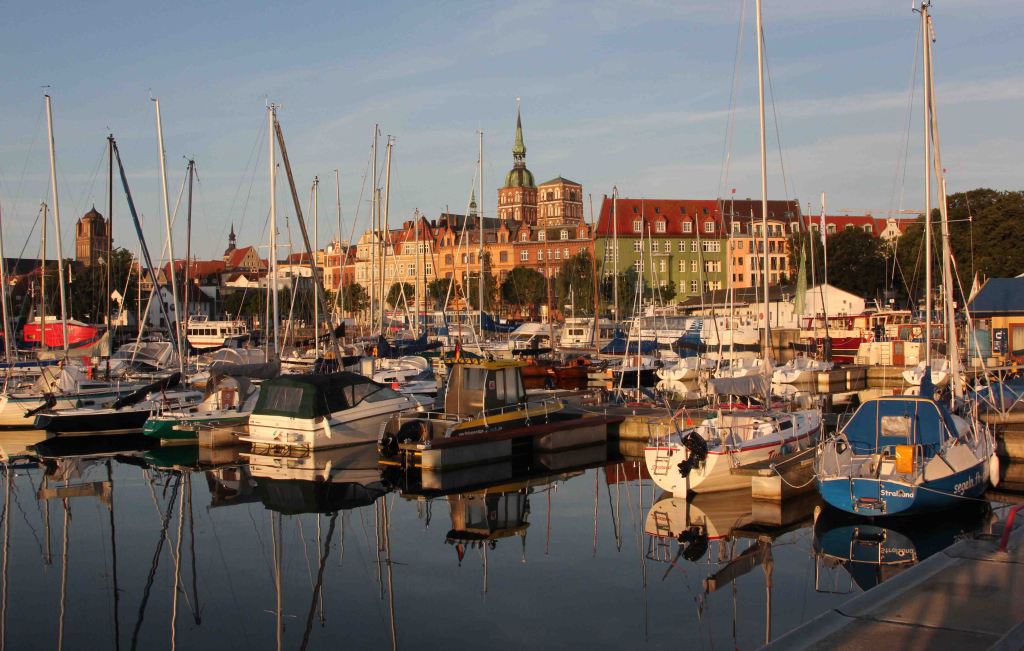
Stralsund
Harbour
Photos from
Stralsund city
As an exchange student I was in this city. There have a lot of things to see, for example habour, old town etc. This city is very popular for old people because there antique building and the old streets. Stralsund is the of city that german people called "fresh city" because of the fresh air from the ocean. It was a bit bored for me to stay in this city but I had a great host family and nice friends so I had lots of fun.
Mecklenburg-Western Pomerania (Mecklenburg-Vorpommernin German, also used in English) is
the least densely populated state in Germany, with a mere 73 inhabitants per
km² (three times less than the national average). With only 1,642,000 people,
it is less populous than the city of Hamburg. Mecklenburg-Vorpommern is also
the poorest German state measured by gross regional product per capita at
purchasing power parity.
Three
of Germany's fourteen national parks are in Mecklenburg-Vorpommern, in addition
to several hundred nature conservation areas. The Baltic Sea and the numerous
lakes contribute to making Mecklenburg-Vorpommern the number-one tourist
destination within Germany, especially popular with Berliners. The state also
boast two of Europe's oldest universities (Rostock and Greifswald, both founded
in the 15th century), and two cities listed as UNESCO World Heritage Sites
(Stralsund and Wismar). Yet, the most beautiful of all is undeniably Schwerin,
the state capital.
Schwerin Castle
The gem of Northeast
Germany, Schwerin is pressed on every side by a multitude of lakes. Oldest city
and capital of Mecklenburg-Vorpommern, it was the seat of a grand duchy, and
its magnificent Neo-Renaissanceducal
castle is one
of the loveliest in Germany.
State Museum Schwerin
On the east side of the Alter Garten in Schwerin is the State Museum
(Staatliches Museum) with its splendid Gallery of Old and New Masters, a
first-rate picture gallery in Neoclassical style that was established in 1882.
The facade was enriched during rebuilding with Italian Renaissance flourishes.
The collection also includes large numbers of works by Flemish and Dutch
masters of the 17th and 18th centuries, and modern art is also represented.
It's also well known for its collection of medieval art, which includes the
famous Neustädt Altarpiece.
Schloss Ludwigslust
Schloss Ludwigslust, about 38 kilometers south of Schwerin,
is the focal point of the Baroque village after which it's named. Built in
1772, this sumptuous palace is home to a collection of courtly art, as well as
artifacts befitting the aristocracy of the 18th and 19th centuries, including
paintings, furniture, and fine décor. It also boasts a beautiful park and
gardens that cover an area of 309 acres.
My family visited me 2 years ago
One of the favourite city in Germany. It was pretty cool! This city is very nice and peaceful. My opa and oma they also love this city.
Hamburg, city andLand(state), located on theElbe Riverin northernGermany. It is the country’s largest
port and commercial centre. The Free and Hanseatic City (Freie und Hansestadt)
of Hamburg is the second smallest of the 16Länderof Germany, with a territory of only
292 square miles (755 square km). It is also the most populous city
in Germany afterBerlinand
has one of the largest and busiest ports in Europe. Its population is over 1.7 million people. The official name,
which covers both theLandand the town, reflects Hamburg’s long
tradition of particularism and self-government.
Maritime Hamburg
THE SCENT OF FREEDOM IS EVERYWHERE
The Port of Hamburg is the second largest seaport in Europe
and is one of the nine largest container harbours in the world: More than eight
million containers are handled here every year. What sounds like an imaginary
industrial site is actually a real "hands-on" port "and one of
Germany's most popular attractions.
Culture in Hamburg
After New York and London, Hamburg is the world's third
largest musical metropolis. Disney's THE LION KING is a classic at the
majestically located Theater im Hafen. It is also the numerous theatres,
museums and galleries, along with the Staatsoper and a colourful club scene,
that make Hamburg a pure cultural pleasure.
Historic Hamburg
The Old Town is indeed Hamburg's oldest
district and the real attraction for many tourists. The most famous, of course,
are the Chilehaus and the office buildings on Burchardplatz, but the
Sprinkenhof, Mohlenhof and the Messberghof are also considered popular tourist
destinations. The "Old Elbe Tunnel", however, remains unchallenged.
The ten-storey office building is one of the historic
architectural monuments of Hamburg. Due to its distinctive architecture with its
lean, unconventional structure - its top evoking the bow of a ship - it is an
attraction known well beyond the boundaries of Hamburg. Built between 1922 and
1924 by F. Höger, it is considered a representative example of the revival of
north German brick construction supported by Hamburg's senior construction
director F. Schumacher and F. Höger.
Green Hamburg
Parks and green spaces Hamburg not only has abundant water, but with almost 1,400
parks offers lots of space for relaxationeven away
from the Elbe and Alster,Spacious, modern and historic gardens and parks
offer plenty of room for relaxation, games and sports in Hamburg.
In my opinion I think Hamburg is a high-technology city. Hamburg isn't a tourist city but it's really good for someone who like industry, factory or technology.I went to Hamburg 2 years ago it was very cool because in this city have many beautiful and old building.










![Free and Hanseatic City of Hamburg [Credit: Amcon]](https://lh3.googleusercontent.com/blogger_img_proxy/AEn0k_vdLhzDTnHgeGe3-uO4yHO9g5cnCEAt86BUSxsMi6jl1SLuwNAu0fCnqovklteG0vtKTJHpg76ssxL8qVEC9CkRmOoyf-cYth7-gihJIeC1XlDm9CAeOsVopxs-9HbIlOHzNz7b6-FK-g=s0-d)


